$0
CheckoutHow to choose a baseball bat
-1200x900.png)
Common Bat Terminology
Just like in most sports, baseball has its own set of terminology. Understanding the terms will help you gain knowledge about the key differences between baseball bats and ultimately help you make a more informed decision. This way you can spend less time researching what baseball bats are made of and more time practicing your swing to build your confidence for the upcoming season.
Are going to buy your first baseball bat? It's good to know everything about it so you get the right bat for your needs. After reading this guide you'll know more about the features of a baseball bat like the materials or the different styles.
Think about this, how can you hit a home run without a bat? That’s right, therefore, a bat is a must-have piece of equipment for the player. Selecting the "right bat" is a more difficult task than you might have thought. Think about all the different lengths, weights and swing weight there are. It also has to match your skill level.

In the picture above you can see the anatomy of a baseball bat. This is very important before buying a bat. All the different parts have a function on their own. Beginning with the knob, this holds your hands in place as they hold on to the grip of the bat. The diameter of the bat tapers from the skinny handle to the wider barrel. The barrel is the part of the bat where you make contact with the ball. At last, you can use an end cap to improve the control of the bat.
Length
Now that we’ve got the first step out of the way, it is time to look at the suited length for your bat. The length of the bat can affect your swing mechanics and plate coverage. With a bat that’s too long, you can risk losing bat speed or worsen your swing mechanics. With a too short bat and you limit your plate coverage, which results in not being able to reach everywhere across the plate. Having the right bat length makes sure you find that equal balance between good swing mechanics and plate coverage.
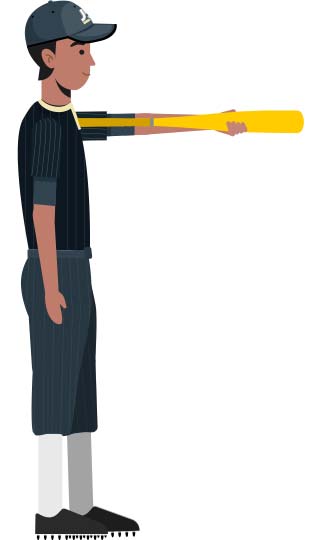
There are three options to check if a bat has the right length for you:
• Place the knob of the bat on the center of your chest, pointing it outwards to the side. Reach out with your arm, if you can comfortably reach the end of the bat with your fingertips, the bat is the right size for you.

• Place the knob of the bat at the center of your chest, pointing the bat forward. If you can reach the barrel of the bat, not the taper, than it is the right length for you.
• Stand up and measure the bat vertically against your leg. The end of the bat should be on the ground. Loosen your shoulders and open your hand and let the bat rest against your palm. If the knob reaches the center of your palm, you’ve found the right bat length.
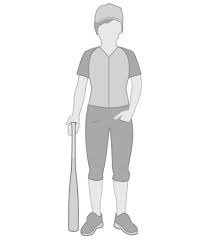
If you’re unable to measure it yourself at home, use the size chart below as a guide to help you out. The size chart helps you get started, but the techniques described above will give you the perfect picture of which bat fits you best.

Weight
The weight is often based on the feel. Try taking multiple swings, when the bat feels heavy or begins to drop during the swing, that bat’s probably to heavy for you. To check if the bat has the perfect weight for you, try holding the bat handle and extend your arm to your side. If you can’t hold your arm extended for 30 to 45 seconds or when the bat starts to drop, the bat might be too heavy for you.
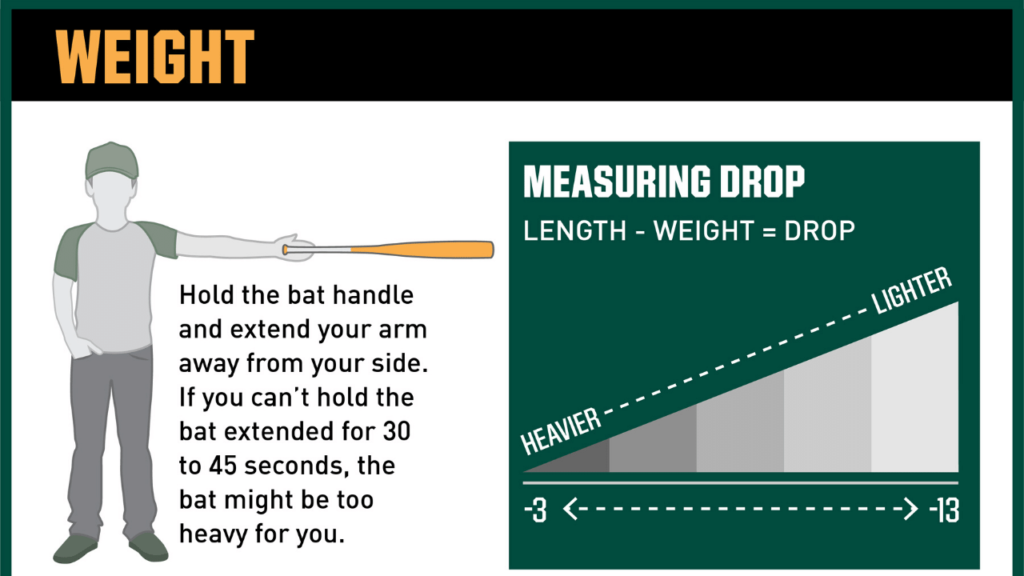
Make sure you look at the “drop weight” as well. A bat’s drop is the amount that’s left after you subtract the weight of the bat from the length of the bat. So for example, a bat which weighs 30 ounces and is 32 inches long has a drop of -2. The bigger the drop weight, the lighter the bat.
Players that have more strength or are bigger, tend to favor less of a drop weight. This can result in more power in hits. Smaller players often go for a bigger drop rate which increases bat speed.
Swing weight
A factor you may not see, but will definitely feel is the swing weight of your bat. Bats are often segmented by their given lenght
and weight. The swing weight is a determination of how a bat's particular weight is distributed along the bat's lenght. For example,
you can have two bat's that are 31 ounces, but that have different swing weights because the 31 ounces are distributed differently in the bat. Bats
can fall along the swing weight spectrum, from light balanced to end-loaded.
End-loaded bats shift extra weight toward the end of the barrel, creating more whip-like action on a player's swing and generating more power.
Balanced bats have a more even weight distribution, allowing for potentially greater swing speed for many hitters. This is the preffered by contact hitters
who want more control of their swing.
25/12/2022 22:35:39
Comments:0
Views:2384
Comments